This article is general wellness education, not medical advice. If you have symptoms, a medical condition, medication questions, pregnancy-related questions, eating-disorder concerns, or pain that changes your daily life, talk with a qualified health professional.
For a day without a stove, start with food that is already ready to eat: canned beans, bread, a spread you enjoy, and produce you can prepare safely. The most useful budget plan repeats those ingredients across a few meals instead of buying a separate collection for every recipe. Below are six combinations, a small shopping route, and a decision guide for choosing between chilled and shelf-stable options.
“Healthy” means different things for different people. These are flexible meal ideas, not a nutrition prescription, a weight-loss plan, or a promise that a particular basket will meet every dietary need. Adjust ingredients for allergies, medical advice, appetite and access. Prices vary by store and package size; this guide makes no claim about a universal cost per serving.
First decide where the food will stay
No-cook describes what happens in your kitchen, not how an ingredient was manufactured. Canned beans are already cooked. Dry beans, ordinary dry rice and products whose labels require heating are outside this plan. Buy only ingredients labelled ready to eat or suitable to eat without cooking. Check unfamiliar products individually rather than treating a whole aisle as interchangeable.
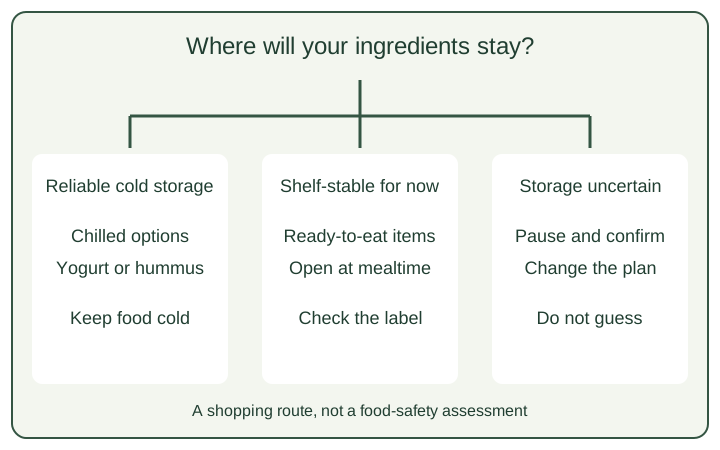
If you have a refrigerator, you can choose yogurt, hummus and other chilled foods while following the label's storage instructions. If you will eat away from refrigeration, choose unopened shelf-stable items and whole produce that can be stored at room temperature, then open and prepare only what you will eat. A lunch bag alone does not establish safe cold storage. Uncertain storage conditions are a reason to change the meal, not to guess how long a chilled ingredient will last.
The FDA's safe food handling guidance says to keep the refrigerator at 40°F or below. Refrigerate perishables within two hours of cooking or purchasing, or within one hour when the outside temperature is above 90°F. Those limits are not a recommended time to leave lunch on a desk. Keep chilled foods cold and follow product instructions; the decision guide cannot tell whether a specific food is safe.
Six combinations you can assemble without a stove
1. White bean and cucumber bread plate
Use ready-to-eat canned white beans, cucumber, bread and a dressing you already like. Drain the beans, rinse produce as appropriate, slice the cucumber and put the components on a plate. Add dressing to the amount you are eating rather than the whole can if you want to use the remainder differently tomorrow. Choose a smaller can when storing leftovers would be difficult. This combination is a starting point; add more bread or beans according to appetite.
2. Peanut butter, banana and bread
Spread peanut butter on bread and add banana when you are ready to eat. Use a suitable alternative if peanuts are an allergen, checking the replacement label for other allergens. You do not need to buy sliced fruit for this meal. An unopened shelf-stable spread can be useful without a fridge, but its label determines storage after opening. The tool's shelf-stable route never overrides that label.
3. Chickpea wrap with crunchy vegetables
Mash ready-to-eat canned chickpeas with a little dressing, then add them to a tortilla with cucumber or another vegetable you enjoy raw. Keep the filling modest so the wrap closes; serve extra chickpeas beside it. Choose an alternative bread if tortillas are expensive locally. If you buy a chilled dressing or add hummus, the meal needs the corresponding cold storage. A wrap is a format, not a guarantee of portability at room temperature.
4. Yogurt bowl with fruit and ready-to-eat cereal
Spoon chilled yogurt into a bowl, add banana or another fruit, and finish with cereal labelled ready to eat. This avoids assuming that every dry grain can be eaten without preparation. Compare plain and flavoured options by the labels and your preferences rather than buying a special “wellness” version. Keep the yogurt refrigerated. For a dairy-free version, use a suitable product and check its storage instructions and ingredients; substitutions need not have identical nutrition.
5. Hummus and vegetable sandwich
Use bread, chilled hummus and cucumber, or another vegetable suitable to eat raw. Keep extra vegetables separate until assembly if you prefer the bread less moist. This overlaps with the bean plate and wrap, so one cucumber can serve several meal ideas. If hummus would be an extra purchase you will not finish, choose the bean plate instead. Buying an additional tub solely to follow a recipe can work against the budget you are trying to keep.
6. Ready-to-eat bean and corn bowl
Combine ready-to-eat canned beans and canned corn with a dressing from your kitchen. Add chopped cucumber if available and serve with bread or crackers. Check each label: this suggestion does not include frozen corn or dried beans that require cooking. Open only the amount you can use and store safely. If you cannot refrigerate leftovers, choose packages sized for the immediate meal rather than planning several days around opened cans.
Shop for overlap before shopping for variety
Pick two or three combinations, then write their shared ingredients once. A practical starting basket could be bread, bananas, a suitable spread, ready-to-eat canned beans and cucumber. With reliable refrigeration, add one chilled option such as yogurt or hummus if you expect to finish it. This is an example basket, not a complete diet or a fixed weekly shopping requirement.
Check what you already have before choosing package sizes. A large container is not automatically the cheaper choice for your situation. Compare unit prices where available, then consider the amount you can actually use, any storage requirements and the money due at checkout. A smaller package may fit your cash limit or storage better even when its unit price is higher. No saving is guaranteed by choosing a particular size.
For a short plan, repeat the bean plate and peanut-butter sandwich, then change the format to a wrap or bowl. Write the next use beside each opened package. If that next use is unlikely, remove the ingredient from the list before buying it. You can use the site's weekly meal map for a longer schedule, keeping this no-cook list as one part of that plan.
Prep a little, and keep the safety steps
Wash hands and food-contact surfaces. The FDA advises rinsing fresh fruits and vegetables under running tap water, including produce with skins you will not eat, and cleaning canned-food lids before opening. Use clean utensils for ready-to-eat ingredients. Check product instructions for preparation, storage and use after opening; this article does not assign a universal shelf life to a mixed salad or opened container.
Prepare close to mealtime when that is easiest. For chilled ingredients, return the remainder to the refrigerator promptly rather than leaving all the packages out while you eat. If you cannot keep leftovers under their required conditions, plan a meal using an appropriate unopened package instead. The tool deliberately asks about storage first because choosing a recipe cannot repair uncertain handling.
For food at work or during errands, decide how you will maintain the required storage before packing. If the answer is unclear, use the shelf-stable route or buy a suitable meal at the time you will eat. People with specific dietary needs should adapt these ideas with their qualified care team. No-cook meals can reduce the kitchen work involved in a particular meal; their suitability still depends on the ingredients and the person eating them.
Use the decision guide as a shopping prompt
Choose a storage route, then the meal format you want. The guide returns an example and one shopping check. It does not calculate nutrients, assess allergies, predict food safety or compare live prices. If you change ingredients, recheck the labels rather than relying on the earlier result. The “not sure” option returns a pause message so uncertainty does not silently become permission to use chilled food.
Keep the first shopping trip small enough to learn what you actually eat. After a few meals, retain the combinations you enjoyed and remove purchases you left unused. The useful outcome is a repeatable choice for your own kitchen, budget and storage conditions, rather than a long list of recipes you feel obliged to complete.